Disc golf baskets
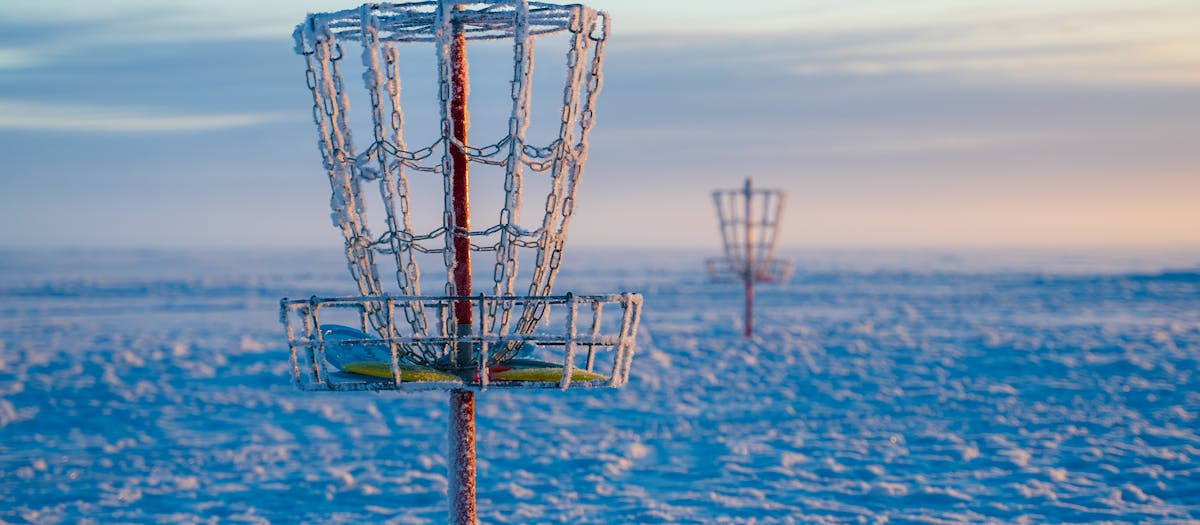
First, the honest answer: you do not need a basket to start playing. Public courses already have baskets installed, and most are free. A practice basket is for putting at home — and since putting is where rounds are won and lost, a home basket is the single fastest way to lower your score once you are ready to drill it. This silo explains what separates a basket that holds your putts from one that spits them out, tiered from portable to permanent.
Retailer pages tend to rank baskets by price or by what is in stock. The aim here is to compare them on the things that actually decide how a basket plays — chain count, catch reliability, portability, assembly and build — so you can match a basket to how you will use it.
The three basket tiers
Baskets sort cleanly into three tiers by how you use them and what they cost. Pick the tier first, then compare within it.
- Portable / practice ($60–120). Lightweight, folds down, easy to carry to the backyard or a field. Fewer chains and a lighter build than a course basket, which is a fair trade for portability. The usual first buy for home putting practice.
- Mid-range ($120–200). Sturdier, more chains, better catch — closer to a course feel while still movable. A good middle ground for a player who putts often and wants reliability without a permanent install.
- Permanent / backyard ($200–300+). Heavy, full chain assemblies, designed to live outdoors in one spot. Catches like a course basket. For a dedicated backyard practice hole or a small private course.
What matters in a basket
The buyer-education layer the listicles skip. Run any basket through these specs.
Chain count and configuration
Chains are what stop a putt and drop it into the tray. More chains, and a smarter inner-and-outer arrangement, catch putts coming in at different angles and speeds. Cheap baskets with too few chains let putts punch through or deflect out — a "spit-out" that punishes a good putt. Chain count is the single biggest predictor of catch quality.
Catch reliability
This is the bottom line: does a putt that hits the chains actually stay in? It depends on chain count, chain length, and the depth and shape of the tray. A reliable basket rewards a good putt and is honest about a bad one. An unreliable basket teaches you nothing, because you cannot trust the result. Catch reliability is what you are really paying for.
Portability
A portable basket folds or breaks down, weighs little, and often comes with a carry bag. That is the whole point of a practice basket — you can move it to a field, a park, or the far end of the yard. A permanent basket trades portability for a heavier, more reliable build. Decide which you need before you compare anything else.
Assembly and build
Some baskets snap together in minutes; others need tools and patience. Build quality — the gauge of the metal, the powder-coat finish, the quality of the chains — decides whether a basket survives weather and years of use or rusts and sags. Permanent baskets should be built to live outdoors; portables can be lighter.
Featured guides
The current published guides in this silo. More land each batch.
Landing next: Best portable disc golf basket, and Best budget disc golf basket.
Who needs which tier
A new player drilling putts at home
A portable practice basket is plenty. You want something you can set up in the yard, putt at for twenty minutes, and fold away. Do not overspend on a permanent basket before you know you will use it. And there is no rush — courses are free, so the basket is purely a practice upgrade.
A serious player or a backyard hole
Step up to mid-range or permanent. The better catch reliability makes practice meaningful, and a permanent basket that lives outdoors turns a corner of the yard into a real practice hole. Match the build to the weather it will sit in.
Kids and casual family play
A lighter portable basket is easiest for kids to set up and move, and the lower stakes mean catch reliability matters a little less. Light and simple beats heavy and serious for casual play.