Disc golf starter gear
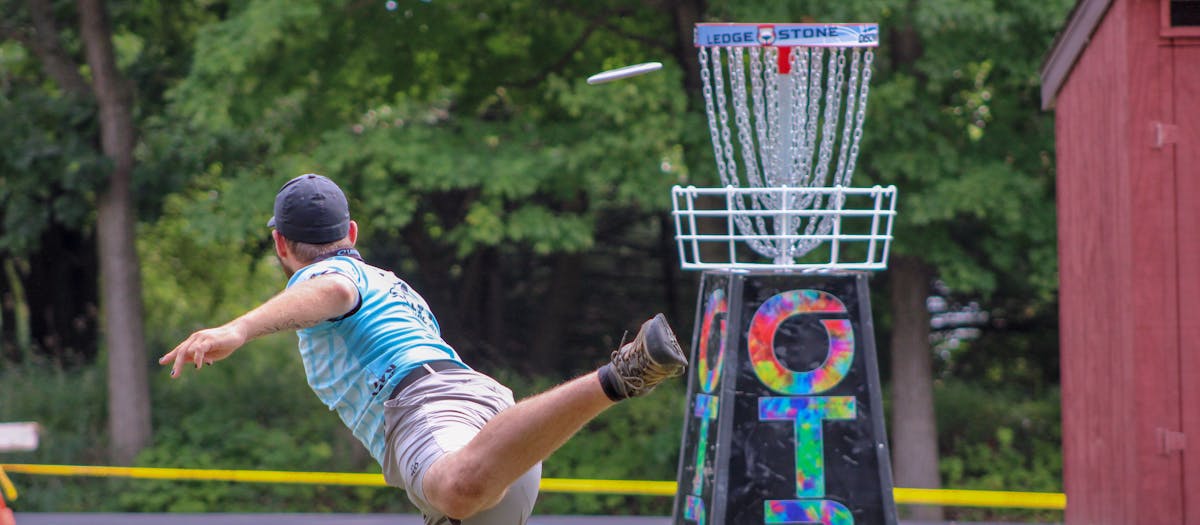
The good news about getting into disc golf: there is almost nothing to buy. Three discs and a free public course are the whole starting kit. This silo is the first-purchase cluster — starter sets, your first three discs, and the basics — laid out in the order that actually matters, so you spend on the right thing first and skip the rest until you need it.
Most beginner gear advice online is either a brand-sponsored list or a retailer page nudging you toward whatever is in stock. The aim here is different: explain what each piece of gear does, which specs separate a good one from a poor one for a beginner arm, and what you can safely put off. No hype, no 14-disc bag you do not need yet.
What to buy first (and what can wait)
If you only read one section, read this. Spend in this order.
- Three discs — buy first. A putter, a midrange and a fairway driver, ideally as a matched starter set. Understable and on the lighter side for a beginner arm. This is the only purchase you genuinely need to play.
- A bag — buy soon. Once three discs feel like too many to carry loose, a small sling or backpack bag tidies them up. Any backpack you own works to start.
- A few accessories — buy soon. A towel to dry your hands and discs, a mini marker, and a water bottle. Cheap and genuinely useful.
- A practice basket — wait. Courses are free and already have baskets. A practice basket is for putting at home, which helps your score most — but it is optional and can wait.
- A high-speed distance driver — wait. A beginner arm cannot throw one properly yet. A fairway driver covers your distance for now.
Featured guides
The current published guides in this silo. More land each batch.
Landing next: Best disc golf discs for beginners, Best disc golf brands, and the overall best-of guide.
What matters in your first set
The buyer-education layer the listicles skip. Run these notes against any set before you add it to a cart.
The three discs — and why three is the right number
A starter set should be a putter, a midrange and a fairway driver — one disc for each band of distance, from short and accurate to long off the tee. Three discs you know well will score better than fourteen you do not, because consistency comes from throwing the same disc over and over. Resist any set built around a high-speed distance driver; a beginner arm throws those worse than a fairway driver, not better. The best disc golf disc set guide breaks down exactly which three to look for.
Stability — understable is your friend
A disc's stability is how it flies for your arm. Beginners want understable discs — ones with negative turn, which curve gently rather than hooking hard left. A slower arm cannot make a flat or overstable disc fly straight, so it just fades out early. Understable discs fight that and fly straighter for you. If the flight numbers are new to you, the discs silo decodes speed, glide, turn and fade in plain English.
Weight — lighter than you would guess
A slower arm gets more distance and more turn from a lighter disc. For drivers, beginners often do best in the 150 to 165 gram range rather than max-weight 170 to 175 gram discs. Putters and midranges are less sensitive, but lighter still helps. Kids and players with a slow arm benefit most from light weights — a heavy disc just stalls and fades.
Plastic — base is fine to start
The same disc comes in different plastics. Base plastic (Innova DX, Discraft Pro-D, Dynamic Discs Prime) is cheaper, grippier, and wears in faster — which actually suits a beginner learning feel, and it is cheaper to lose in the woods. Premium plastic costs more and holds its flight longer, which matters once you settle on the discs you keep. Start in base; upgrade later.
What you do not need yet
A distance driver
The wide-rimmed, speed-12 discs pros bomb downrange need a fast, well-timed throw to fly right. Thrown by a beginner, they hook hard left and land shorter than a fairway driver would. Build a smooth throw first; the distance follows. The discs silo explains the speed scale so you know when you are ready.
A practice basket — only once you want to drill putting at home
Public courses already have baskets, and most are free. A practice basket is purely for home putting practice, which is the fastest way to lower your score — but it is a later, optional buy. The baskets silo covers how to choose one when that day comes.
The full premium bag
A $200 backpack bag holding three discs is dead weight. Match the bag to the discs you actually carry. A small sling, or even a backpack you already own, is plenty for a beginner kit. The bags silo sizes bags to the player you are now.